Salsa Roja Tatemada
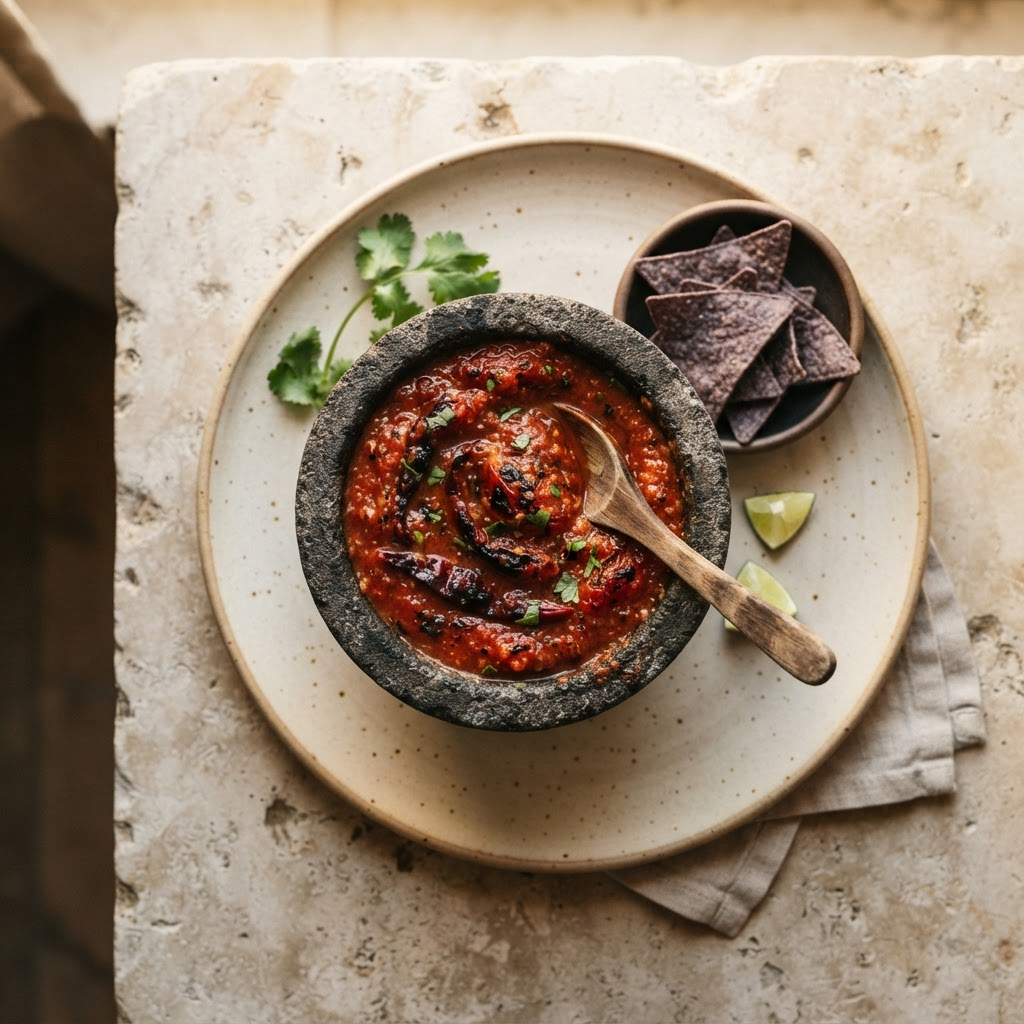
*Tatemar* means to char — and charring is the whole secret. This is the
red salsa that sits in the squeeze bottle at every respectable taquería:
roma tomatoes blistered black on a dry comal, garlic soft and spotted,
chiles de árbol pressed until they toast, everything ground to a rustle,
not a purée. The char is the flavor — smoky, sweet, a little wild — and it
is the difference between a salsa that tastes cooked and one that tastes
assembled. Fifteen minutes, four ingredients, one hot pan. Once you make it
this way, the food-processor version reads like a rumor.
Salsa Roja Tatemada
Prep: 5 minutes · Cook: 12 minutes · Total: 20 minutes · Makes about 1½ cups
Ingredients
The char
- 450 g (1 lb) roma tomatoes
- 3–5 chiles de árbol, stems removed (this is your heat dial — see the Chef's Note)
- 2 garlic cloves, skin on (about 10 g)
- ¼ white onion (about 40 g), cut side down
To finish
- 60–120 ml (¼–½ cup) water
- ¾ tsp fine salt (about 4 g), to start
Instructions
- Char the tomatoes. Comal over medium-high, dry. Tomatoes on, turning every 2 minutes and pressing them down, for 8–10 minutes total, until the skins are blistered and blackened in patches and the flesh slumps. goes full ash and the smell turns acrid, start that one over: burned bitterness does not come back, char does. Checkpoint — blackened patches like street cred — but if the tomato
- Char the garlic, onion, and chiles alongside the last few minutes of the tomatoes: garlic until soft with black spots, about 6 minutes; onion until charred on the cut face, 4–5 minutes; chiles pressed flat with the spatula for 20–30 seconds a side, just until they darken, release their toast, and turn slightly brittle. count before they scorch. Checkpoint — the chiles smell raisin-toasty; past that, seconds
- Blend coarse. Tomatoes (skin on — never peel), peeled garlic, onion, chiles, 60 ml (¼ cup) of the water, and the salt into the blender. Pulse 4–6 times to a rustic, spoonable texture with visible flecks of char — a purée is a different salsa.
- Rest, then taste. Let the salsa sit 10 minutes. The chile heat blooms and settles in that time, so season after, not before. Adjust with the remaining water until it flows off the spoon like thin paint. rustic enough to see the char. Checkpoint — smoky-sweet up front, heat arriving behind it, texture
- Equipment: a comal, dry cast-iron skillet, or heavy griddle — no oil,
ever. A blender. Ventilation on: dry-toasting chiles stings the eyes.
- Everything goes on the pan dry and stays in motion. The pan should be
hot before anything lands.
Troubleshooting
| Symptom | Cause | Fix |
|---|---|---|
| Acrid, bitter edge | Chiles or tomatoes scorched to ash | Nothing rescues true ash — rechar fresh pieces and reblend |
| Tastes raw and sharp | Under-charred tomatoes, or salted before the rest | Char until properly black-spotted; always taste after the 10-minute rest |
| Too hot | Chile count, not technique | Blend in another charred tomato, or half a charred onion |
| Too thin or watery | Over-blended or over-watered | Add a charred tomato; pulse once, never blend |
| Flat flavor | Comal not hot enough — steamed instead of charred | Pan fully hot, pieces turned, never crowded |
Storage, Make-Ahead & Variations
- Refrigerate up to 5 days, covered — the flavor deepens on day two. - Salsa roja cocida: simmer the blended salsa 5 minutes for a deeper, softer, taquería-vat style. - For a molcajete version, pound in batches starting with the salt, then garlic, then chiles, then tomatoes — texture like wet sand, and the scent of the whole street.